About Me
👋 Hi! I’m Xiaomeng Huang, a PhD candidate in the Educational Communication and Technology program at New York University, where I am fortunate to be advised by Xavier Ochoa in the Augment-Ed Research Group. My research bridges the learning sciences, AI in education, and learning analytics to study learner agency in human–human and AI-mediated collaboration. I aim to address an enduring and increasingly pressing educational question: how can education help learners become capable and responsible co-constructors of knowledge?
I was also a research intern at ETS Research Institute, where I was mentored by Jiangang Hao in the Assessment of Complex Skills group. Prior to NYU, I earned an Ed.M. in Technology, Innovation, and Education from Harvard University, advised by Bertrand Schneider, and worked with research teams across Harvard and MIT.
Research Program
Education is not only about what learners know, but also about who they become as co-constructors of knowledge.
My research asks how education can help learners develop shared epistemic agency—the capacity to take shared responsibility for co-constructing and advancing knowledge—in human–human and human–AI collaboration. I pursue this agenda through three interconnected strands: understanding how knowledge is co-constructed and advanced, measuring the socially situated capacities through which learners contribute to collective knowledge building, and designing pedagogical AI that supports these capacities and collaborative processes without displacing human judgment or responsibility.
Research Area 01
Understanding
How knowledge is co-constructed and advanced in human–human and human–AI collaboration
I study how ideas are introduced, taken up, connected, challenged, and transformed through interaction. I develop analytic approaches, including Idea Tracing Analysis, that make the temporal and structural development of collective knowledge—and the distribution of epistemic work across human and AI participants—visible.
Selected work
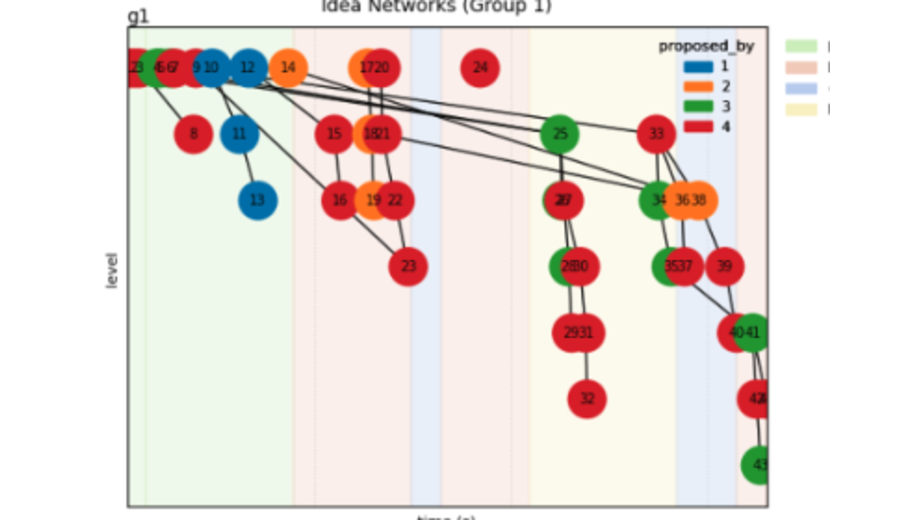
Idea Tracing Analysis (ITA): A Temporal-Structural Methodology for Modeling Collaborative Discourse and Contextualizing Multimodal Interactions
Introduces a temporal-structural methodology that connects individual interaction to the evolution of collective knowledge.
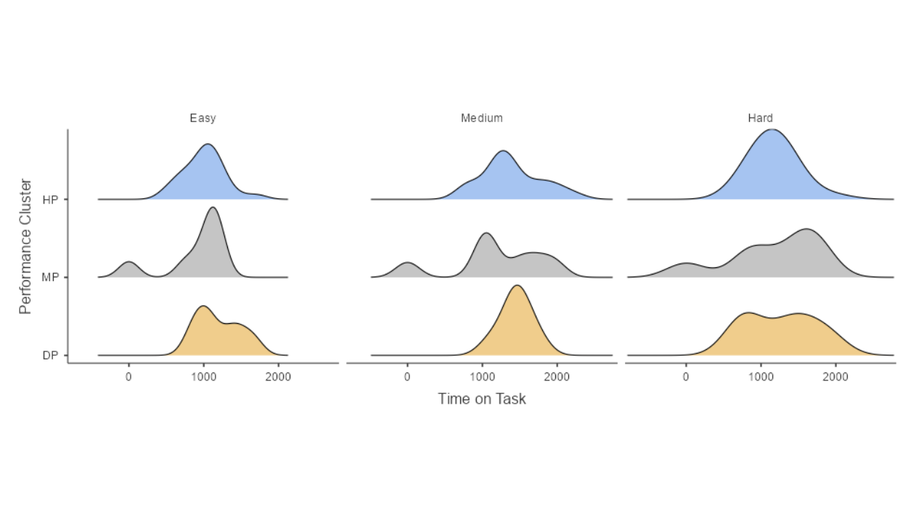
Exploring the Potential of Generative AI to Support Non-experts in Learning Analytics Practice
Shows that responsible AI-supported analysis depends not only on prior expertise but on how users inspect, evaluate, and coordinate with AI-generated work.
Research Area 02
Measuring
The socially situated capacities through which learners contribute to collective knowledge building
I develop theory-grounded and context-sensitive approaches to measuring socially situated capacities such as active listening. I use multimodal AI as a computational sensor to detect and organize otherwise difficult-to-observe behavioral evidence while preserving an interpretable chain from construct to behavior to inference.
Selected work
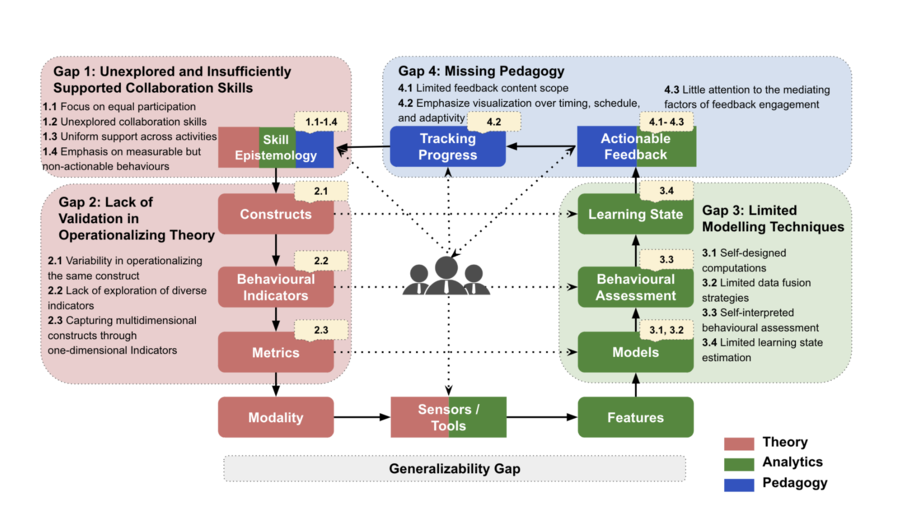
Charting the Development of Collaboration Skills Through Collaborative Learning Analytics Systems
Introduces the TAP framework and identifies validity and learner-modeling requirements for systems designed to develop collaboration skills over time.
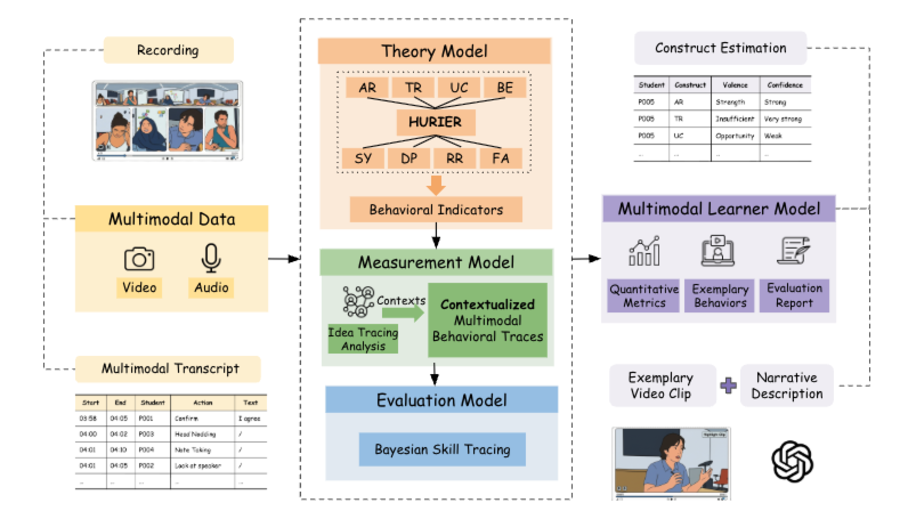
The TME Framework: Multimodal Learner Modeling for Active Listening Skills in Collaborative Problem Solving
Develops a theory-grounded framework that connects active-listening constructs to contextualized multimodal evidence and interpretable learner models.
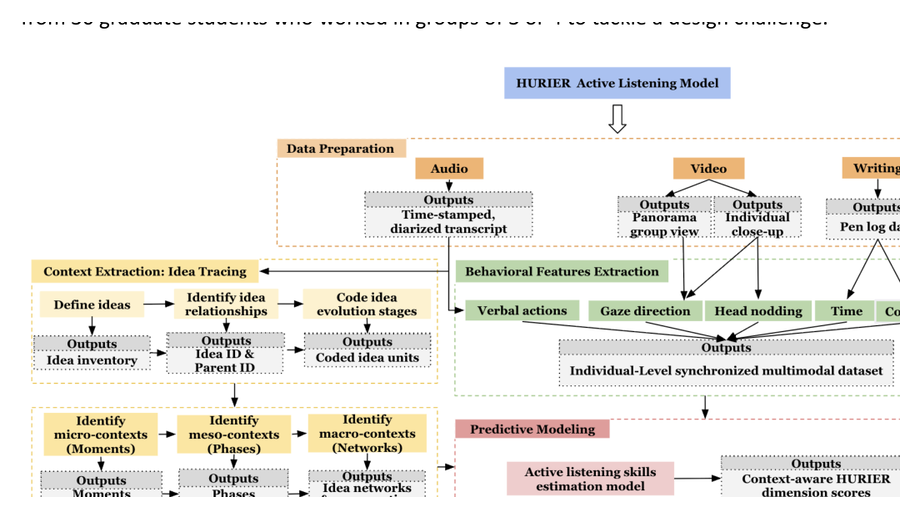
Towards Automated Measurement of Active Listening Skills in Collaborative Problem Solving Using Multimodal Learning Analytics and Large Language Models
Develops an automated multimodal pipeline for detecting active-listening evidence in small-group collaborative problem solving.
Research Area 03
Designing
Socially informed pedagogical AI to cultivate shared epistemic agency
I design and study socially informed pedagogical AI that uses evidence about learners and their collaborative context to provide context-sensitive feedback and facilitation. My goal is to support learners’ development as capable and responsible knowledge co-constructors while keeping human interpretation, judgment, and responsibility at the center.
Selected work
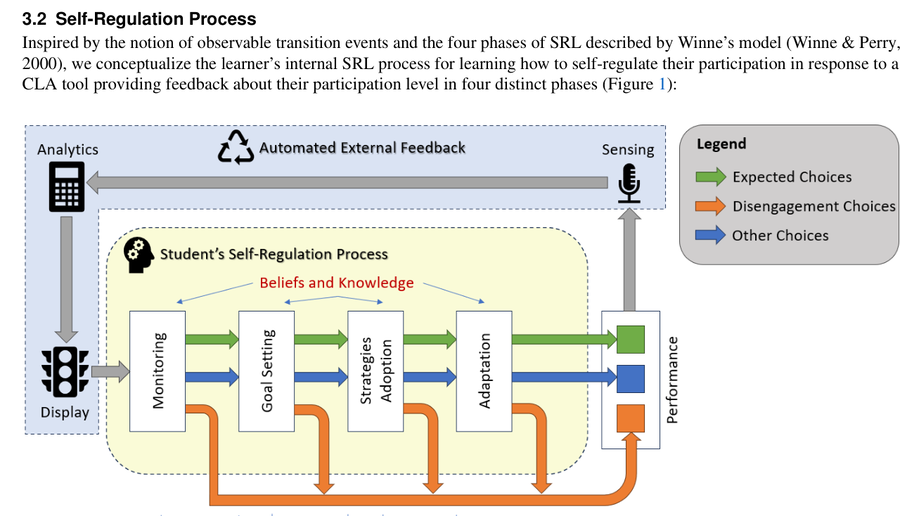
Unpacking the Complexity: Why Current Feedback Systems Fail to Improve Learner Self-Regulation of Participation in Collaborative Activities
Shows why participation visualizations alone produce uneven change and identifies interpretation, motivation, and context as conditions for actionable feedback.
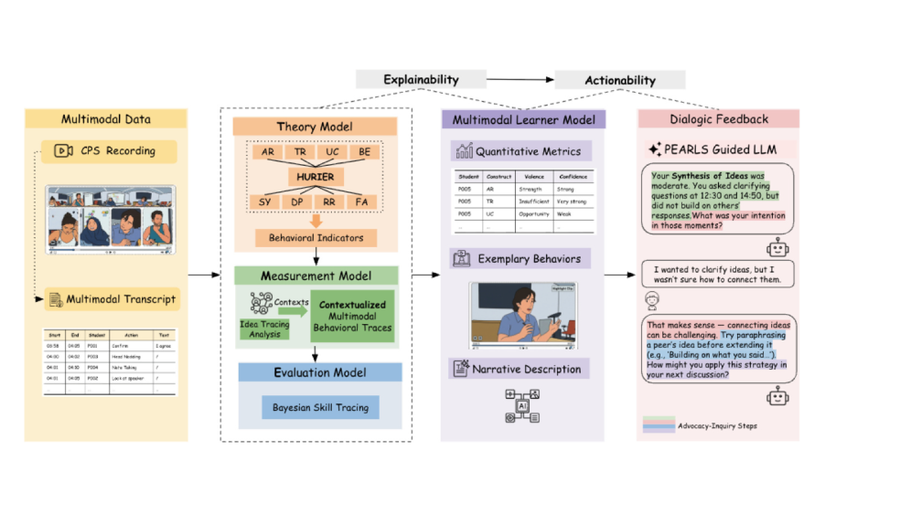
Bridging Explainable Modeling and Actionable Feedback: Multimodal AI-Augmented Pedagogical Interventions for Developing Active Listening Skills in Collaborative Problem Solving
Connects interpretable learner evidence to context-grounded feedback designed to support reflection and future active-listening development.
Teaching & Mentoring
My teaching focuses on helping students become thoughtful and responsible users of emerging technologies. This philosophy parallels my research on shared epistemic agency: learning to work productively with AI requires judgment about what to delegate, what to verify, and what intellectual responsibility the learner must ultimately retain.
Selected course
Artificial Intelligence for Data Analysis in Education
Instructor, NYU · Fall 2026
A course on using AI responsibly throughout the educational data-analysis process, with an emphasis on critically evaluating AI outputs, making defensible analytical decisions, and retaining responsibility for the conclusions produced.
Mentoring
I mentor graduate and undergraduate researchers across education, learning design, computer science, and applied psychology. My mentoring emphasizes theory-driven inquiry, methodological rigor, and meaningful participation in collaborative scholarship.
Current and former mentees include student coauthors on CSCL and LAK publications.